


What the Trees Whispered
What the Trees Whispered is a program of four contemporary chamber works built on a shared idea: listening to things older and slower than we are. Flowerpots and living plants keep watch over the vanishing redwoods. A single bell-like figure echoes eleven times and fades. A Philadelphia forest turns through its seasons without pausing for breath. An ensemble whistles like wind through willows, calling up murmurings from a dark millennium. Each piece leans in close to the natural world and finds it already speaking — chamber music as an act of paying attention.
Read about each piece below and feel free to click on the composer photos to read more about them.

Eleven Echoes of Autumn
George Crumb (1929 - 2022)
…y los arcos rotos donde sufre el tiempo (…and the broken arches where time suffers) — Federico García Lorca
George Crumb grew up in Charleston, West Virginia, and became one of the most distinctive American composers of the 20th century. His music is known for its hushed intensity, unusual playing techniques and a sense of sound arriving from very far away. He won the Pulitzer Prize in 1968, and the poetry of Federico García Lorca shaped much of his work in those years.
Eleven Echoes of Autumn was commissioned by Bowdoin College for the Aeolian Chamber Players and completed in 1966. It is scored for alto flute, clarinet, violin and piano, and its eleven short sections (the "echoes") are played without a break. Almost everything grows from a single idea: a small, bell-like figure built on the whole-tone interval. It returns again and again in new rhythms and colors, the way a sound changes as it bounces back from different distances.
The Lorca line above hangs over the whole piece and is heard in performance before each cadenza. Its image of broken arches is even drawn into the notation of the middle echoes. The overall shape is an arch of its own: the music gathers slowly to a climax in the eighth echo, then crumbles gradually toward silence.
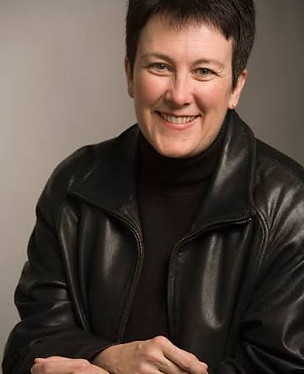
wissahickon poeTrees
"Nature is ominous. It is everything. Everything that exists has in some form sprung from nature." So begins Jennifer Higdon's note for wissahickon poeTrees, and she is honest about the challenge: to depict nature in music, "even the most successful musicalization, is to barely scratch the surface of a beautiful reality."
Her answer is to stay close to home. Wissahickon Park is a seven-mile forested valley running through Philadelphia, about 1,800 acres of woods and creek, named a National Natural Landmark in 1964. Higdon, a Pulitzer Prize winner who spent much of her career in Philadelphia, wrote the piece as a tribute to the park as it moves through the seasons, indifferent to the people walking its trails.
Commissioned and premiered by Philadelphia's Network for New Music, the piece is laid out like a clock turning through the year, and it is played without pause, "as nature's seasons never cease to blend from one into another." Even the title follows the forest: it is lowercase except for the Trees.
The sextet of flute, clarinet, violin, cello, piano and percussion reaches well past its usual sounds. The flutist and clarinetist switch to alto flute and bass clarinet, the pianist plays inside the instrument, and every player picks up a wine glass and a crotale. The result is shimmering and wide open, a forest heard from the inside.

sequoia
Yaz Lancaster
The redwoods are among the oldest and largest living things on earth. Some were already standing when the Roman Empire fell. Yaz Lancaster's Sequoia starts from that scale and turns it into something close and personal. In Lancaster's words, the piece is "about the recognition of biodiversity loss, through the specific and personal example of redwood trees. It is also about taking time to notice and appreciate nature around you, as this loss is happening."
The instruments make that idea literal. Sequoia is written for percussion and fixed electronics, but the percussion is played on flowerpots and living plants. The sounds are small, earthy and a little fragile: the kind you only hear if you stop and lean in. Over the recorded electronics, the ensemble builds a texture that feels less like a performance about nature than a performance alongside it.
Lancaster (they/them) is a Black transdisciplinary artist whose work moves between music, poetry and visual art. They perform as a violinist, vocalist and steelpan player, and their work deals with liberation, identity, natural phenomena and poetics. Sequoia opens tonight's program the way a walk into old-growth forest begins: by getting quiet enough to notice what's already there.

Music of Amber
I. Wind, Willow, Whisper II. Sanctuary
Amber is ancient tree resin, hardened over millions of years, that sometimes holds a leaf or an insect perfectly preserved inside. Joseph Schwantner's Music of Amber has that same quality: something very old, glowing and suspended in time.
Schwantner, who won the Pulitzer Prize in 1979, wrote the piece in 1981 on a commission from the Fromm Foundation, and the New York New Music Ensemble gave the premiere. It won first prize in the Kennedy Center Friedheim Awards for chamber music. It is scored for flute, clarinet (doubling bass clarinet), violin, cello, piano and percussion, and Schwantner asks most of the players to do something unexpected: whistle. Their thin, airy tones drift over ringing piano and percussion like wind moving through branches.
Rather than a conventional program note, Schwantner wrote a poem for the piece. Its two stanzas mirror the two movements, from a bright morning celebration to the shadows of a deep forest:
Wind Willow, Whisper….
A gentle breeze,
Early morning mist
Dew on languid leaves,
Sweet birds sing
In exultation,
A celebration….
Sanctuary….
Deep forests,
A play of shadows.
Most ancient murmurings
From a dark millennium,
The trembling fragrance
Of the music of amber….